
Presentación en España del programa HP ATA para el sector educacional

Hola.

Ayer tuve la oportunidad de vivir en primera persona, por aquello de que participé como ponente, la presentación a nivel nacional, y en primicia, del programa de formación HP ATA.
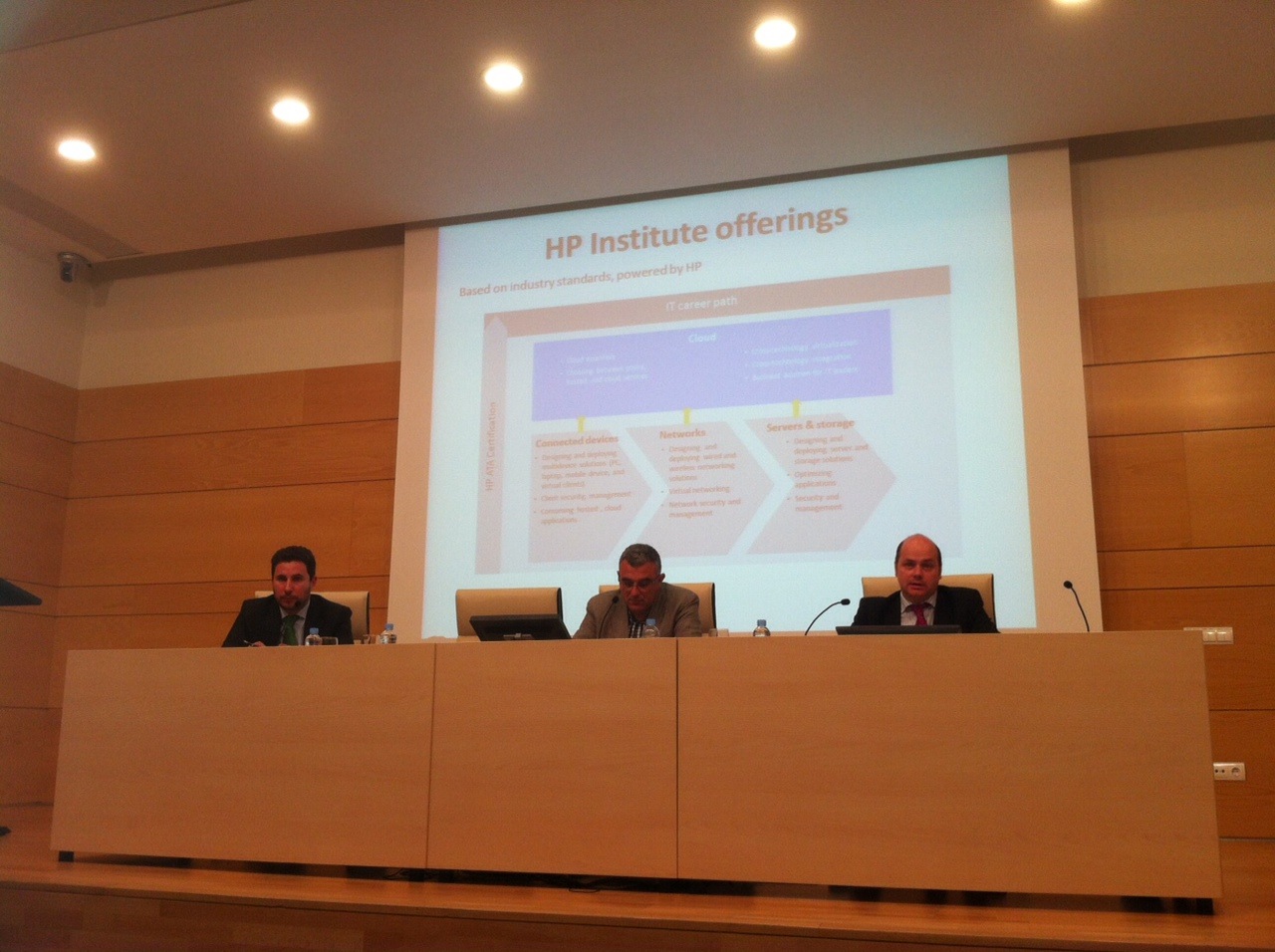
Presentación programa HP ATA

La presentación se realizó en un salón de actos de la Escuela Técnica Superior de Ingeniería Informática (ETSINF) de la Universitat Politècnica de València. Asistieron al acto alrededor de 50 personas, el cual estuvo presidido por el vicerrector de Recursos Digitales y Formación Online, D. Vicent Botti, y el director de la ETSINF, D. Eduardo Vendrell, el responsable de HP Levante D. Mario Ruiz y un servidor.

El acto fue muy dinámico, el público asistente participó de forma muy activa, entablando un bloque de preguntas muy interesantes que nos sirvieron para profundizar en el contenido del programa formativo, que como ya sabéis incluye los módulos de dispositivos, redes, servidores & almacenamiento y tecnología cloud.

Ya son varias las personas que han mostrado su interés por este programa procediendo a matricularse en el mismo.

Estoy convencido de que actos como este nos ayudan a difundir la importancia de las certificaciones tecnológicas en este país, algo que ya en otros países se encuentra mucho más avanzado, y que desde luego en España está comenzando a «despertar» con mucha fuerza.

Pronto os contaré otros casos como este, ya que son varias las universidades interesadas en el lanzamiento de este programa.
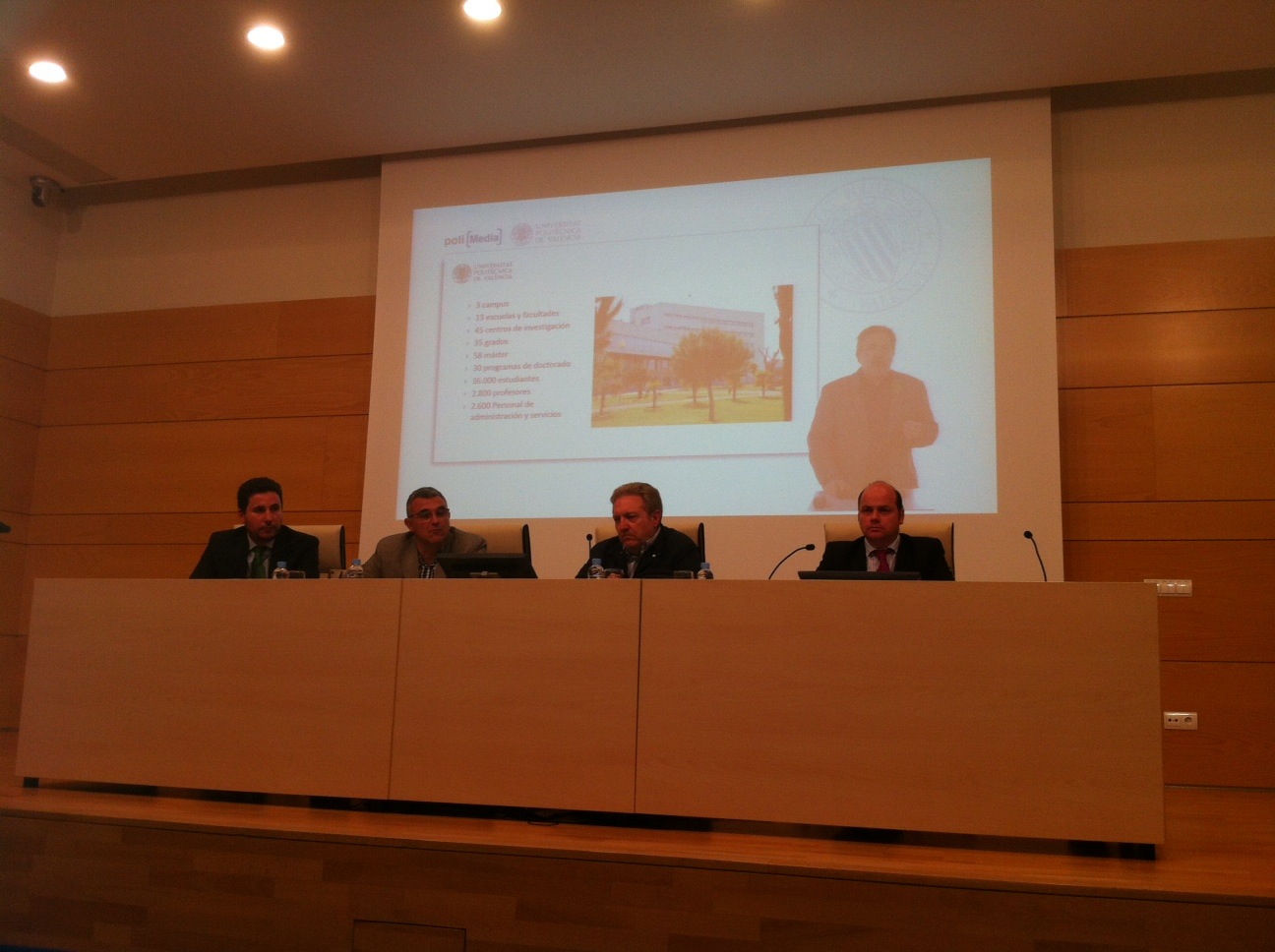
Otro momento de la presentación

Desde aqui quiero agradecer a los miembros de UPV, especialmente a Eduardo y Mª José, su apuesta por la formación de calidad para sus estudiantes, a Mario su asistencia al acto, y desde luego a los muchos asistentes que allí se dieron cita.

Un saludo y hasta el próximo post.

Luis.
HP ATA – IT for Business

Hi my colleagues, friends and followers.

Yesterday HP started a new learning line, the Business Career Track, with the new program HP – IT for Business.

The HP ATA – IT for Business certification is designed to teach business students how to achieve business results through technology

In the course, students will learn the key IT solution elements and how they are used to solve business challenges. Students will identify business problems and opportunities, identify specific technologies that support those business objectives, and evaluate various solutions from a business perspective. Students will learn about hosted, co-located, and cloud solutions, as well as the differences in functionality and cost between those and traditional on-premises solutions. In addition, students will learn about how to classify and ensure data security in each environment. The course presents several business scenarios where students will gain practical experience in defining and executing the business-side responsibilities in a technology project, and identifying the key areas where technology initiatives can go off track.

The skills students are going to learn are:

1. Identify the pillars of IT and describe how they are used to solve business challenges 

1.1 Identify key infrastructure components and describe their business implications

1.2 Identify key business-relevant applications and describe their business implications

1.3 Identify the importance and types of business data, and describe the business implications of proper data management

1.4 Identify key security elements and describe their business implications

1.5 Identify key management elements and describe their business implications

1.6 Identify types of services that a business consumes and describe their business implications

2. Define the business problem or opportunity to be addressed 

2.1 Discover and describe the organization’s business context

2.2 Identify the desired business outcomes

2.3 Assess ways in which technology can address a stated business problem

2.4 Define the key success factors and constraints for a proposed solution

2.5 Identify key success measurements

3. Evaluate alternative solutions (collaborate with the project team members) 

3.1 Analyze and prioritize potential solutions

3.2 Recommend a solution that aligns with the business goals and constraints

3.3 Evaluate the proposed solution against the impact on the business

3.4 Quantify the business value of the solution in terms of

3.5 Identify the components of a high-impact business case

4. Plan, execute, and monitor a project that produces an IT solution 

4.1 Collaborate with an IT project manager to prepare a business-side project plan

4.2 Execute the business-side project plan

4.3 Perform business-side post-release activities


A great opportunity to continue growing as a professional in the IT sector.

Please feel free to contact me if you want further information.

All the best for all of you and see you in my next post

Luis.

Microsoft Office Specialist World Championship for 2013

Habéis leído bien, se anuncia el «Microsoft Office Specialist World Championship for 2013«.

Certiport anuncia la convocatoria para el campeonato mundial de Microsoft Office Specialist en su edición de 2013.

Enfocado para los estudiantes de MOS, este campeonato mundial pone a prueba las habilidades de los estudiantes. Los alumnos con las mejores notas, y con los tiempos de ejecución más bajos, pueden ser seleccionados para representar a su país y competir en el campeonato mundial de Microsoft Office.

Demuestra tus habilidades en Microsoft Word, Excel ® y PowerPoint ® y podrás ganar una invitación para competir en la final del Campeonato Mundial en Washington DC!. Demuestra a tus amigos que eres el mejor entre los mejores.

Para poder participar el estudiante debe poseer la certificaciones de una de las siguientes competencias antes del 15 de junio:

• Microsoft Office Specialist Word 2007

• Microsoft Office Specialist Excel® 2007

• Microsoft Office Specialist PowerPoint® 2007

• Microsoft Office Specialist Word 2010

• Microsoft Office Specialist Excel® 2010

• Microsoft Office Specialist PowerPoint® 2010

Gana un viaje a Washington DC para representar a su país y competir en el Campeonato del Mundo!.

Si quieres más información sobre este campeonato mundial no dudes en ponerte en contacto conmigo y te contaré como poder participar.

Hay importantes premios para los ganadores.

Un saludo y hasta el próximo post,

Luis.

¿Cómo pretenden posicionarse los programas formativos de certificaciones en IT?

Programas certificaciones IT

Existen diversos programas formativos para certificar los conocimientos, y competencias, en IT.

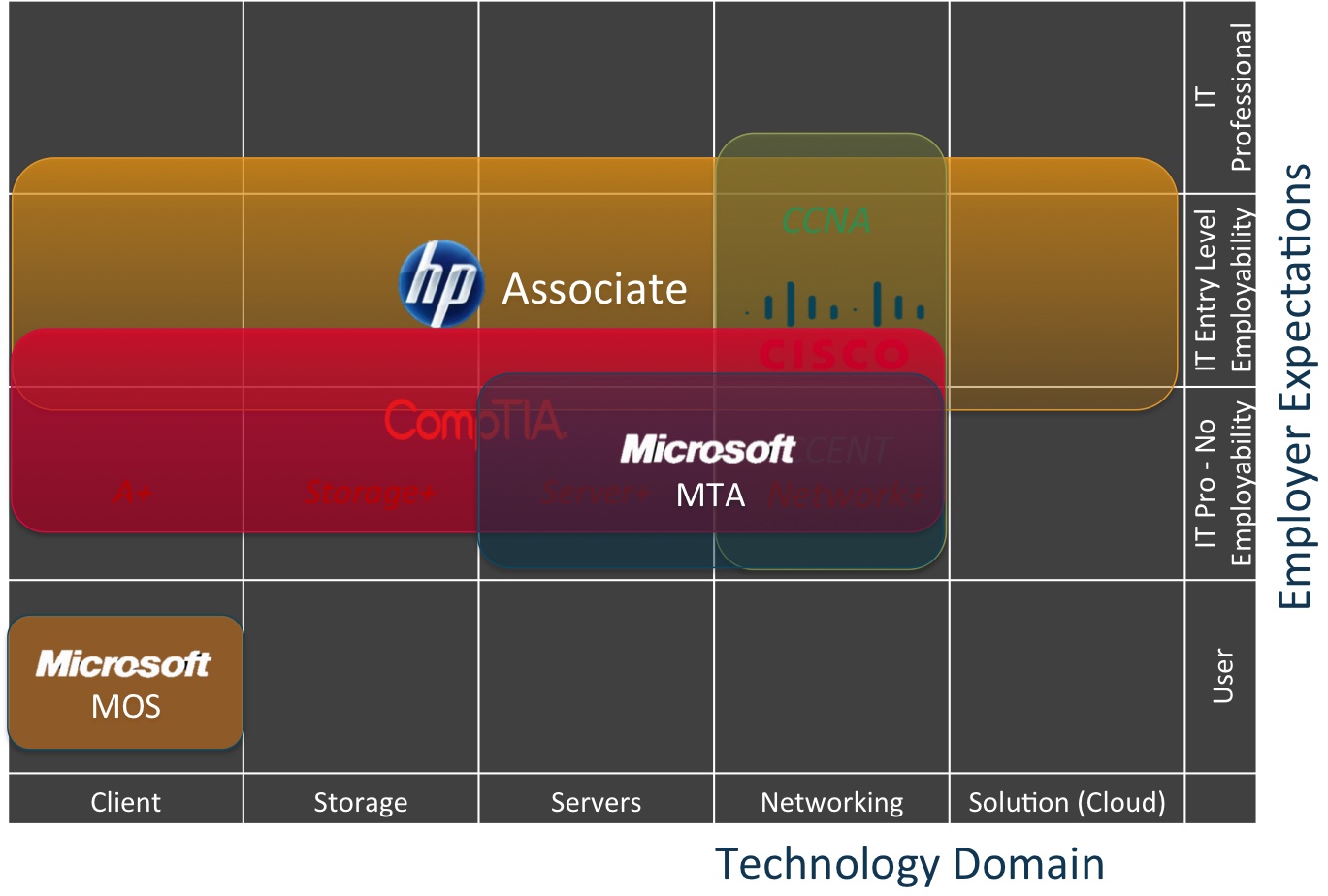
Lo cierto es que cada uno pretende cubrir un segmento de mercado diferente, o dicho de otro modo, cada uno se centra en un público objetivo concreto. No obstante estos programas, como no puede ser de otro modo, se solapan en algunas de las habilidades, o competencias docentes, en las que forman.

En este post os adjunto un cuadro donde se puede apreciar el posicionamiento que cada uno de los diferentes programas quiere cubrir. Espero que os sirva de utilidad si estáis pensando en iniciar una carrera formativa en cualquiera de ellos, ya que muchos de estos representan el primer paso para una formación posterior de mayor nivel. Obviamente hay muchos otros programas, este cuadro se centra en los programas HP ATA, CCNA Cisco, CompTia Strata, MTA Microsoft y MOS Microsoft.

Un saludo y hasta el próximo post.

HP ATA – Cloud

Hi my colleagues, friends and followers.

Lets talk about the fourth HP ATA program, which is one of the most interesting: of course we are talking about cloud.

The HP ATA – Cloud certification provides the knowledge and experience required to discover and meet the business objectives of a small and medium business and to design an end-to-end IT solution that meets their unique requirements. This includes on-premises elements, hosted and cloud services. The certification also includes the knowledge and skill to deploy and troubleshoot the solution.

The skills we are going to learn in this program are:

1. Explain and recognize industry-standard cloud and virtualization technologies and their implications for customer needs

2. Plan and design end-to- end IT solutions for SMB customers

3. Install, configure, and upgrade end-to-end IT solutions for SMB customers

4. Optimize and troubleshoot end- to-end IT solutions for SMB customers

5. Administer and manage end-to-end IT solutions for SMB customers

Of course all these skills have different objectives inside to design and develop cloud solutions.

HP Remote Labs give students hands-on experience managing the hardware and software used in small and medium-sized businesses, and these labs are available with all HP ATA programs.

HP Remote Labs give students hands-on experience that they will use in real-world IT jobs. The Remote Labs include:

  • Live equipment. These are not simulations. All work takes place remotely on LIVE equipment located in an HP datacenter.
  • Real-world scenarios. Placed in real-world situations, students configure systems to demonstrate their knowledge and skills.
  • Modern hardware and software. Students explore and test their capabilities on modern hardware and software used by prospective employers.

Feel free to contact me if you want further information.

All the best,

Luis.

HP ATA – Servers & Storage

Continue with our overview of HP Academic program, it´s time to analice the content of Servers and Storage academic training.

The HP ATA – Servers & Storage certification provides the knowledge and experience required to discover and meet the business objectives of small and medium businesses and to design an application hosting and data storage solution that meets their unique requirements.

The skills you are going to learn with this academic program are:

1. Explain and recognize industry-standard server technologies and their implications for customer needs

1.1 Describe processor technologies and their implications for customer needs

1.2 Describe memory technologies and their implications for customer needs

1.3 Describe common server system architectures and their implications for customer needs

1.4 Describe common storage technologies and their implications for customer needs

1.5 Describe networking technologies as they relate to server implementation and performance, and their implications for customer needs

1.6 Describe various types of server applications, their functionality, and their configuration profile, including file/print servers, Web/FTP servers (static, dynamic), proxy servers, DB servers, network services, terminal servers, messaging servers, virtual servers, and authentication services

1.7 Identify and describe the common industry OS and application solutions stacks currently supported by x86/x64 systems

1.8 Describe the architecture elements of industry-standard operating systems

1.9 Describe server hardware management technologies

1.10 Describe the common components of data centers

2. Recognize and describe HP and industry-standard server products and solutions

2.1 Identify and describe server products

2.2 Describe health and fault management tools and technologies

2.3 Identify and describe Remote Management offerings

2.4 Describe the features and options of various rack series

2.5 Identify and describe power protection and power management

2.6 Identify and describe network options

2.7 Identify and describe storage options

2.8 Identify and describe standard management solutions for Windows®/Linux on x86 and/or x64

2.9 Identify and describe HP ProLiant Essentials packages (Foundation and Value Packs) and when to use them

2.10 Identify and describe the use and benefits of vendor management utilities such as HP SIM management

2.11 Identify and describe HP standard warranties and other service offerings

3. Plan and design server and storage solutions for SMB customers

3.1 Design, size, and validate the solution

4. Install, configure, and upgrade server and storage solutions (including both rack-mount and blade systems) for SMB customers

4.1 Verify the physical installation

4.2 Install server supported operating system

4.3 Install and configure management software

4.4 Validate, test, and document the solution

5. Performance-tune and optimize server and storage solutions for SMB customers

5.1 Determine whether performance is optimal

5.2 Identify and resolve bottlenecks and tune the system

5.3 Check for known performance issues

6. Troubleshoot and perform repair/ replacement procedures for server and storage solutions for SMB customers

6.1 Troubleshoot common server and storage issues using the HP 6-step troubleshooting methodology

7. Manage servers and Storage systems using HP Infrastructure Management

7.1 Manage servers and storage using HP Systems Insight Manager

7.2 Manage servers and storage with HP ProLiant Essentials

7.3 Manage using HP server services

8. Administer and operate server and storage solutions for SMB customers

8.1 Perform system upgrades

8.2 Design and implement the appropriate fault management solution

As always, feel free to contact me if you want further information.

Regards,

Luis.

HP ATA – Networks

Now is time to know more about HP ATA Networks certification. This certification provides the knowledge and experience required to discover and meet the business objectives of a small and medium business (SMB) and to design a wired and wireless switched and routed solution that meets their unique requirements. The certification also includes the knowledge and skill to deploy and troubleshoot the solution.

The skills you are going to learn are:

1. Explain and recognize networking technologies and their implications for customer needs

1.1 Describe the OSI model

1.2 Describe and recognize the most common data link protocols and their associated physical connections (layers 1 and 2)

1.3 Describe layer 3 routing concepts with detailed focus on IP

1.4 Identify common dynamic routing protocols and describe their function on a network

1.5 Describe the purpose and function of layer 4 (transport) protocols on an IP network

1.6 Describe the common IP-based upper layer (layers 5, 6, and 7) protocols and applications

1.7 Describe multicast technology and its purpose

1.8 Describe the concept of quality of service (QoS)

1.9 Describe how to secure a network using basic security features

1.10 Describe the common ways to increase availability and performance of a network

1.11 Describe the concept and use of VLANs

1.12 Describe the common network management technologies

2. Plan and design wired and wireless network solutions for SMB customers

2.1 Consult with an SMB customer to assess their business and technical needs and create a plan for a networking solution

2.2 Design a networking solution to meet the customer needs identified in the planning stage

2.3 Identify and describe best practices for designing solutions

3. Install, configure, start up, and upgrade network solutions for SMB customers

3.1 Prepare for and install networking equipment

3.2 Install and configure management and administration solution

3.3 Validate installed solution

4. Optimize wireless, switched, and routed network infrastructures for SMB customers

4.1 Manage network assets using HP and third-party tools

4.2 Optimize network performance by improving segmentation and topology

4.3 Optimize L3 routing protocol convergence and scalability

4.4 Optimize network availability

4.5 Optimize and scale wireless network configuration

4.6 Optimize security on wired/wireless networks and devices

4.7 Optimize power utilization by implementing Green IT practices

5. Troubleshoot wireless, switched, and routed network infrastructures for SMB customers

5.1 Troubleshoot routed and switched networks

5.2 Troubleshoot remote connectivity

5.3 Troubleshoot wireless networks

5.4 Troubleshoot security faults and threats

5.5. Troubleshoot common network issues using the HP troubleshooting methodology

6. Perform administrative, operational, and network management tasks for SMB customers

6.1 Perform change management to network configuration and devices

6.2 Manage network events and policies

6.3 Perform network administration tasks


If you want further information, please feel free to contact me.

Regards,

Luis


HP ATA – Connected Devices Certification

Some days ago we were spoken about IT certifications, and we were talking about HP ATA program.

Now is time to know more about the HP ATA program.

Today we are going to speak about: Connected Devices Certification (the course details are):

1.- Explain and recognize industry-standard client technologies and their implications on customer needs

1.1 Describe and recognize common desktop virtualization technologies and products

1.2 Describe and recognize mobile computing technologies and their implications on customer needs

1.3 Describe and recognize traditional PC technologies and their implications on customer needs

1.4 Describe and recognize thin client technology and solutions

1.5 Describe and recognize cloud technology as it relates to client solutions

2. Plan and design client solutions for SMB customers

2.1 Consult with an SMB customer to assess their business and technical needs and create a plan for a client solution

2.2 Design a client solution to meet the customer needs identified in the planning stage

3. Install, configure, and upgrade client solutions for SMB customers

3.1 Create pre-installation checklist

3.2 Set up a new PC (hardware)

3.3 Install the OS (operating system)

3.4 Set up a new mobile device

3.5 Set up a thin client

3.6 Configure management tools and resources

3.7 Conduct user training, handoff, and performance tuning

4. Troubleshoot and perform repair/ replacement procedures for client solutions for SMB customers

4.1 Troubleshoot common client issues using the HP 6-step troubleshooting methodology

4.2 Describe how to best use support resources

5. Perform

5.1 Perform change management and version control

5.2 Perform backups

5.3 Perform administrative and maintenance tasks

Tomorrow we will speak about other programs.

If you want further information, feel free to contact me.

Regards,

Luis.